Only a few years ago, in August of 2019 we were out Bay View way collecting oranges, when we drove on a bit and just happened to stumble upon a patch of wild beach flowers.
Let's be honest, the black irregular, stony beaches north of Napier are pretty monochromatically boring, so to find some colour and interest was pretty exciting.
The next bay along is Tangoio.
From here we began the most remarkable adventure of accidental coastal discovery.
One day we were just driving through Pandora (the bit where the big trucks park up near the estuary) when some bright orange flowers caught my eye. When we stopped and went to explore, we discovered a crazy space that we came to learn had once had a number of fishermen's cottages on it- they evidently dumped all their rubbish in the backyard too as there is a wild array of old bits of metal, porcelain and other crap that surfaces with the seasons. There's also the extraordinary consequence of a vast swathe of naturalised grape hyacinth bulbs. Whoever would have thought that those little "blue soldiers" would enjoy seaside living!
You really do have to watch every step when wandering around here: firstly, to ensure that you don't step down a rabbit hole or on rusty old metal & secondly that you don't step on the flowers. You can, however, come from the other side off the limestone path , step through the beach spinach (if the rabbits haven't gobbled it all) and visit the grape hyacinths a little more safely.
The grape hyacinths generally flower in the latter part of August and in to early September.
I do so love their gentle musky fragrance. The flowers are also edible. They are a little astringent but a few bells used as decoration or in salads is quite fine.
The Pandora fishermen's triangle is home to a wide array of interesting wild plants like this lemon wild radish, yellow and orange calendula, wild scilla, paper whites, double romans and stars- jonquils.
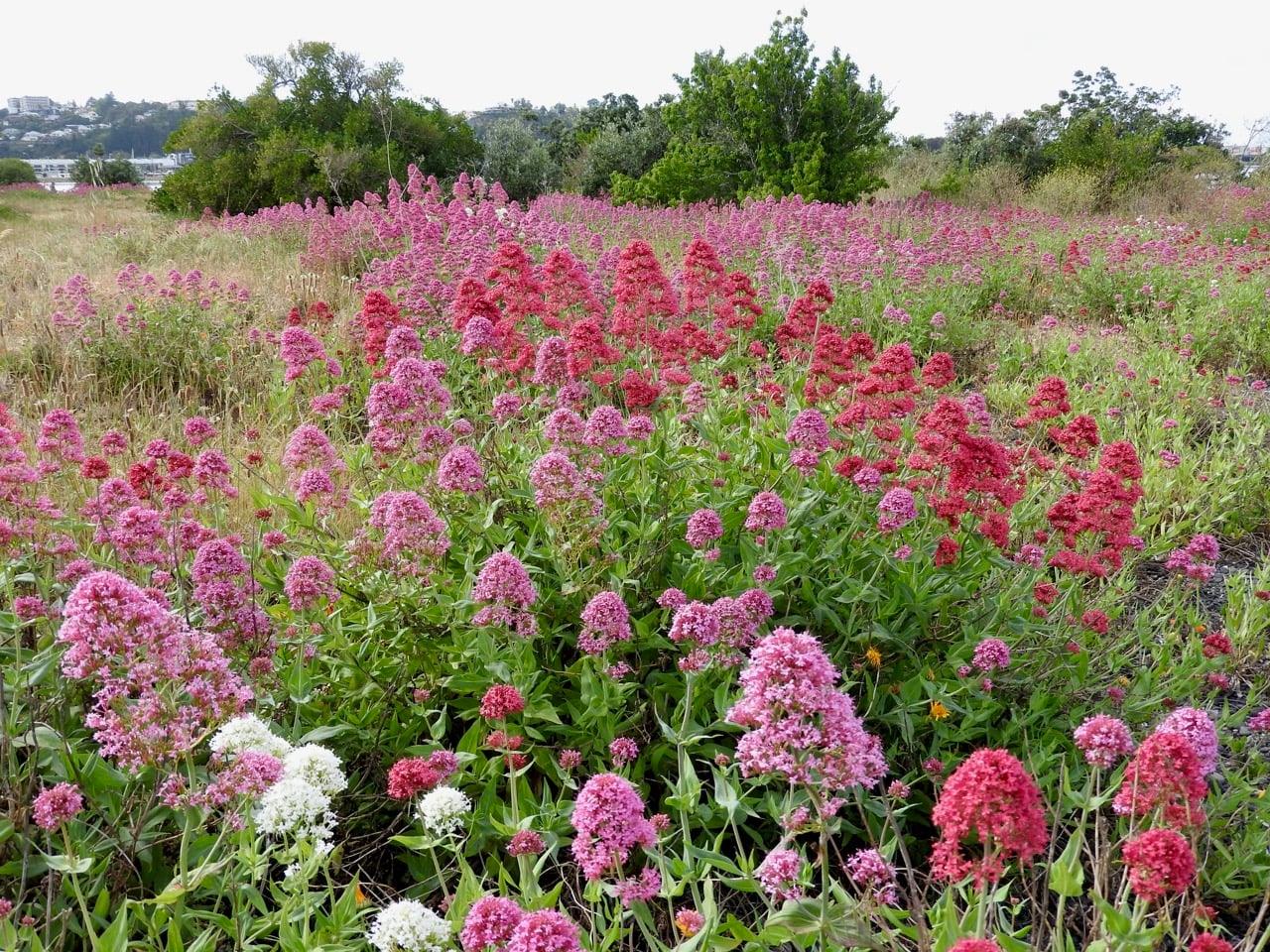
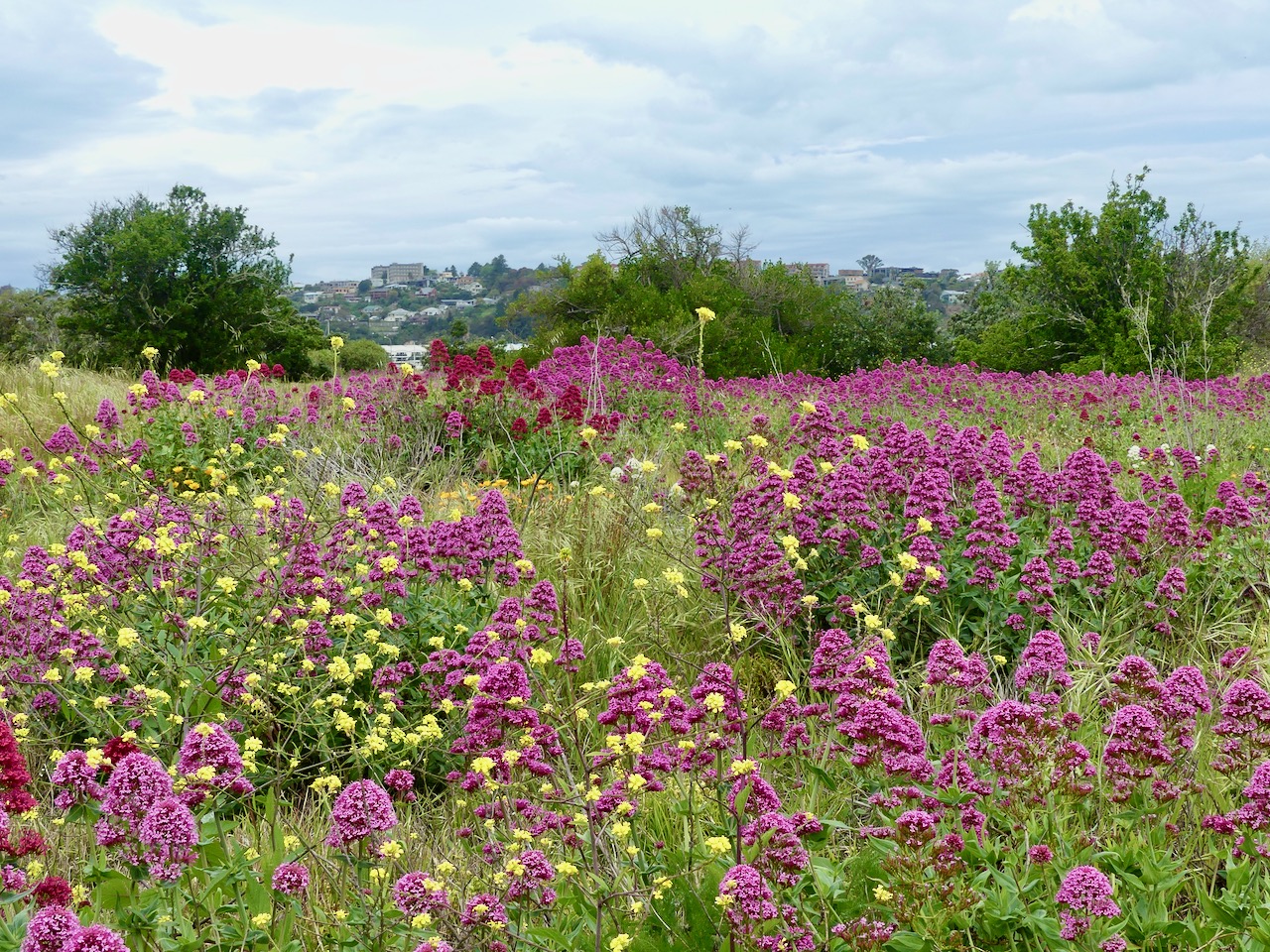
We were amazed to find that the centranthus ruber had settled in so happily too, creating a colourful floral patchwork for many months.
It's interesting to see that generally the rose pink colour dominates, then comes the red & just a little of the white as an accenting addition.
Through winter and in early in spring the leaves of centranthus ruber make a good addition to a wild greens mix- best cooked.
Such a colourful and resilient wild flower. It was the plant that first grew in the bare ground in London after the Blitz.
It's amazing how many people pass on by down the official walkways and never realise the wild garden just to their right even exists.
Such a lovely place for a spring picnic.
There's often a stiff breeze, so it's good that there are various spots to set up out of the wind.
Then come the hare's tail grass.
The indigo wild scilla.
Trifolium arvense- is also known as hare's-foot clover, rabbit-foot clover, stone clover.
Another spot again.
Picking a few jonquils- Stars.
Even a native Karo grows in amongst it all.
Sometimes it's breathtakingly lovely. Other times we can't understand what we saw in the place.
Occasionally we take visitors.
Seaside visits can make you hungry. This rustic french apple tart is one of our favourites.
It's also the time of violets.
The different coloured blooms make different shades of jelly.
Jewel-like, light and delicious.
Later in the spring a mass of Rosy garlic appears.
The seeds are useful as a little garlic hit in cooking.
Of course, it wouldn't be an adventure if you knew what you were going to find.
We have only this week discovered the next extraordinary spot along the coast line. Once you've driven out past the airport and you're just heading passed Crab Farm winery you'll see a sign for Roger's road to the right. Oh dear it's a no exit road so we thought we'd park the car, leap across the railway line and see what was there. Oh look there's some prickly pear bushes.
No, don't touch! Those naughty fine prickles stay in your hands for weeks.
We discovered that a long time ago, much to our chagrin.
Lots of californian poppies ( Eschscholzia californica) thrive in this beachside environment.
There is also a mass of tree lucerne, needle broom, polygala, osteospermum and gazanias.
The perpetually flowering Polygala.
There were various kinds of prickly pears. Some more prickle than pear!
Some a tad grumpy.
While others are crimson.
Coming back down the railway line I stepped in to a forest of prickly pear- help!!
They've turned in to crazy prickly trees.
But we got one! A paper bag works quite well for harvesting. The fine prickles will go through almost any kind of glove.
From where we parked the car in Roger's road, if we had turned left and walked up that way we would have reached Le Quesne road (pronounced Lucan) but we would have missed all the excitement! However, that leads us to the Succulent beach that our friend Mitchell mentioned in passing one day at the Napier Sunday market. So really we're just following the coastline as we head north.
The succulent beach has it's own character.
People often plant random things or dump garden rubbish at the beach so there are sometimes surprises.
These vibrant lachenalias make a colourful beachfront carpet in late winter.
There are a number of resilient and distinctive old pine trees along this stretch.
A surprise white rugosa rose amidst the gazanias- heavenly perfume.
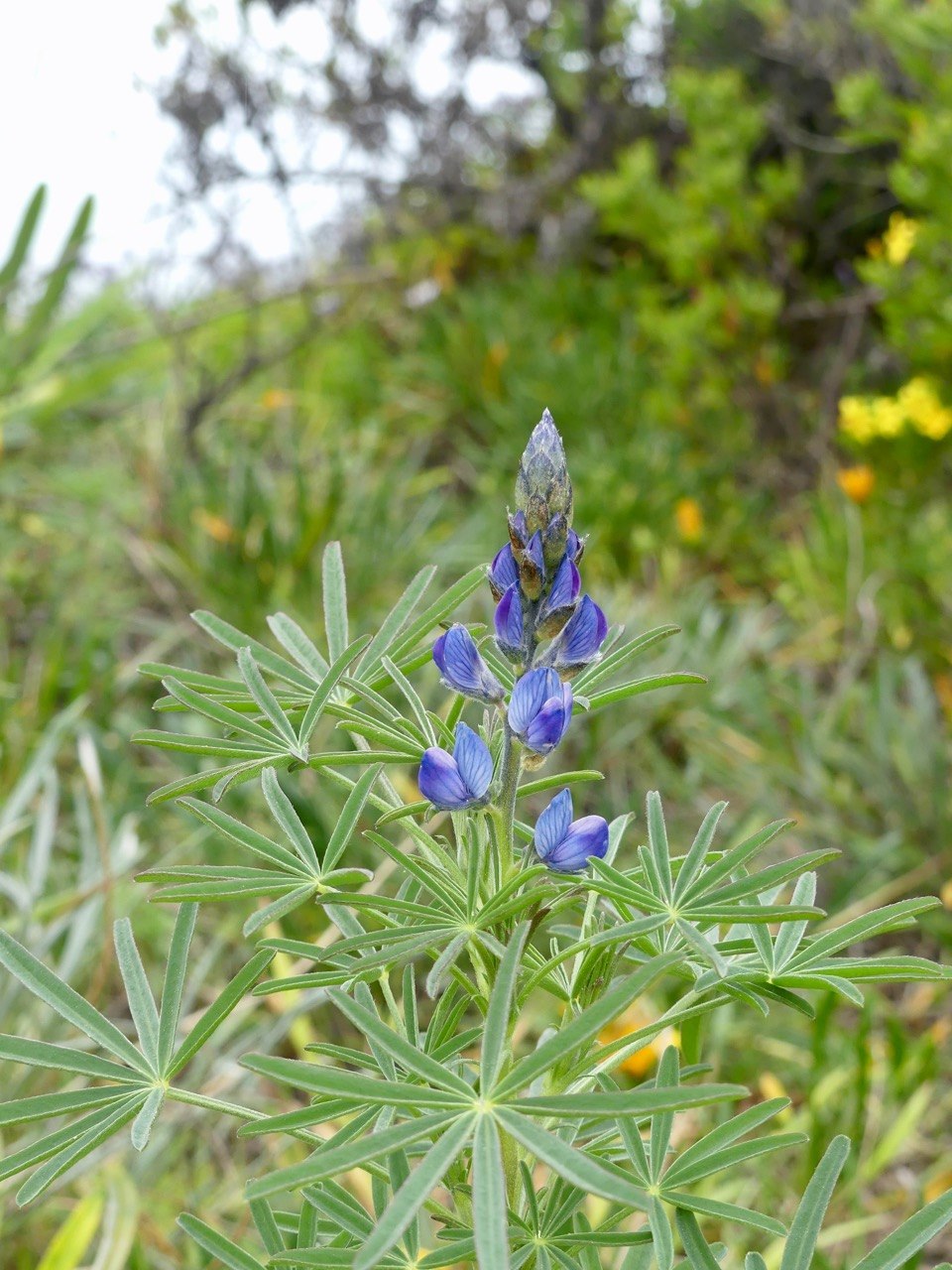
A blue lupin along the far coastal path, which if followed will lead you to the mouth of the Esk river
What glorious wild freesias.
There is an unusual beach valley at the succulent beach, where we have found a colony of statice happily growing in the shelter of the valley. No doubt arriving there by being turfed over the cliff in garden waste.
There are often structures built with driftwood to be found along this coast and occasionally a bridesmaid or two.
And right there- is the port and Bluff Hill.
A huge amount of driftwood seems to be deposited on this part of the beach.
It's great building material- not sure if it's a hut or a bonfire all set to go, but Nina and Luca had fun playing on it.
And then we found a yucca flower. What's this Aunty Catherine?
The high tides evidently meet the wild flower patches quite regularly.
We came across this great posie one time.
All nice and cosy for a picnic.
Pig face (Ice plant) comes in various colours.
Then by October there is the biggest surprise when the Queen's gazanias burst in to full bloom. I'm not quite sure how they got from the main road to the succulent beach but they were originally planted in honour of Queen Elizabeth's Napier visit in 1963.
Funny how you hardly notice them the rest of the year.
Californian poppies ( Eschscholzia californica) have also settled in amidst the gazanias in a kind of camo collusion.
They go for miles. So much better than just weeds and stringy grass.
For a long time it never occurred to us that there would be any distinction between one stretch of beach and another as it all just unfolds beachside in stone grey.
We could not have been more wrong. I don't know what you would call them, as they are not suburbs as such, but one day last October we decided to turn down the road that leads to beach access at Whirinaki and that was quite nice, until we drove and drove down the far end and along the way and we looked in utter amazement at the patchwork explosion of colour everywhere we looked.

Other vibrant succulents also make there own statement.

The centranthus ruber attracts the butterflies.
A lovely mix of mauve Livingston daisies and yellow gazanias.
We have to say that we love Whirinaki beach front the best. There are pathways and seats and shelters along along the way.
I've never had afternoon tea in a beach garden before. These yellow lupins are so pretty.
Such a magical place.
Residents make their own additions including geraniums. This heritage variety apple blossom rosebud is one of my favourites.
Some beautifully crafted structures.
And more prickly pears.
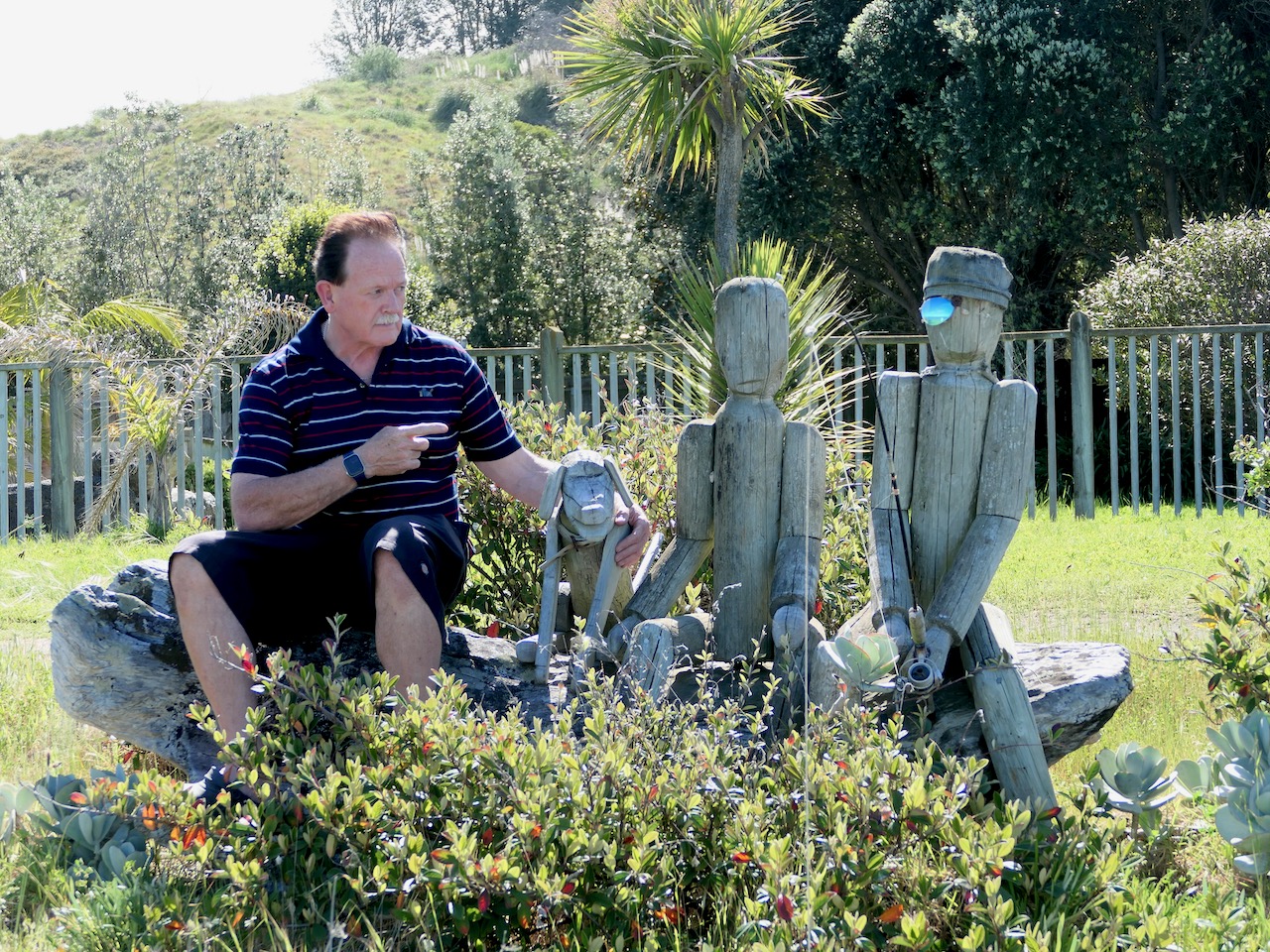
A few characters we encountered right at the end. Doing a spot of fishing I see.
Up the main road a bit further along you'll catch sight of a row of Pohutukawa trees that seem to flower almost all year round. The crimson stamens make a delicious syrup.
You can find the recipe just
here.Many people like to tell us that biodiversity is the only answer, but I wouldn't trade this wonderland of colour and joy for all the scraggly seaside natives in the world. Would you?


.jpeg)
.jpeg)


.jpg)




.jpeg)
.jpeg)
.jpeg)

.jpeg)
.jpeg)
.jpeg)
.jpeg)
.jpeg)
.jpeg)

.jpeg)
.jpeg)





.jpg)


